Tuesday, February 28, 2006

Bread and Whispers


At mid-life many of us find ourselves tempted to despair. Half our lives gone, more than half our strength spent. The work in which we have invested still bears but little fruit. The bright goals to which we press look farther away than ever. People disappoint. The young pastors who lead our churches have milk for the babes, but nothing for the mature except work. Both the generations before and after us need more and more from us. We are disappointed in ourselves.

Forget "mounting up like eagles". Forget "running and not being weary". We can barely "walk and not faint". Our refrain becomes, "vanity, vanity! All is vanity!" But though the saints grow weary and experience spiritual depressions, it is not to characterize us, nor to be a permanent condition.

Elijah at mid-life utterly defeated 850 prophets of Baal (I Kings 18), discredited their power before assembled Israel and encouraged Israel to execute God's judgement on them so that none escaped alive. Queen Jezebel issued a death warrant against Elijah in retaliation. And Elijah, that mighty one, slunk off to the wilderness, asking to die (I Kings 19:4).

But God revived him. With bread from heaven. And a "still, small voice" in the midst of a raging storm, an earthquake and a fire.

All of these are figures of God's Word.
Bread
Several of the prophets eat the scroll containing God's Word in their visions.
"I AM the bread of Life." (Jn 6:35)

Storm and earthquake
"The voice of the Lord is powerful...The voice of the Lord breaketh the cedars....The voice of the Lord shaketh the wilderness...." (Ps 29)

Fire
"I will make my words in thy mouth a fire..." (Jer. 5:14)

But if you read the account in I Kings, you'll notice that for exhausted, depressed Elijah, God was not in the storm or the earthquake or the fire. The Word of God was to him nourishment and gentleness.

Are you exhausted? Depressed? Despairing even? Open your Bible.

Monday, February 27, 2006

Thorns & Thistles


Thorns and thistles in the original Curse on sin (Gen 3:17 -24) are a symbolic reminder of the things that choke out fruit in our lives. The things that wound instead of nourish. Wicked men are pictured as thorns (Judges 2:1 -3). Men whose fruit is pain.

Lent begins on Wednesday, a time when many Christians prepare to celebrate Christ's victory over sin and death, by reflecting on our own sins which pierced Him. We have been the thorns in His crown. But it is not a time of mere remorse. It is time to weed.

The fasting aspect of Lent is designed not merely to allow us to beat our breasts over our failings, wounding our sinful habits. It is intended to provide a power-surge that will allow us to root them out altogether. Lent is when we can collectively get serious about killing off the sins that hold us back.

Our homeschool day begins with a worship time and Bible discussion. On Ash Wednesday (or as soon thereafter as possible), we prune our rosebushes and bring in bouquets of thorns. As we decorate the house with these sharp reminders of our sin, we ask God what chokes our growth, what starves our fruit. And we ask Him to show us what He would be pleased to help us to root out now. And then we ask each other to help us to discipline ourselves to mortify those things - not to offend or wound them, but to cut them off entirely.

On Good Friday, we hold a bonfire. As we lay the thorns to the flame, we remember that God's firey wrath was poured out on Christ to consume our sins. And we rely in faith on Christ's finished work for assurance that we need never be choked by those sins again.

Thursday, February 23, 2006

College Tour to Yesterday

Little did we think, when we boarded the plane, that we would be time-traveling. But New St Andrews College is as much from another time as it is from Idaho.

There, the classes have Latin names: Traditio Occidentalis, Disputatio... The students actually read the great books that Western thinkers have been mining (without exhausting the vein) for centuries. They think the thoughts of the great thinkers after them ("This is not a class about what I think of Plato. It is not a class about what you think of Plato. It is a class about what Plato thought.").

Everyone breaks for tea in the Junior Common Room between morning seminars on Mondays and Tuesdays. And at least once a week, the professors must appear in full academic regalia before the assembled college. Students, too, don robes for this dress occasion - except for the lowly freshmen, who must first earn them.

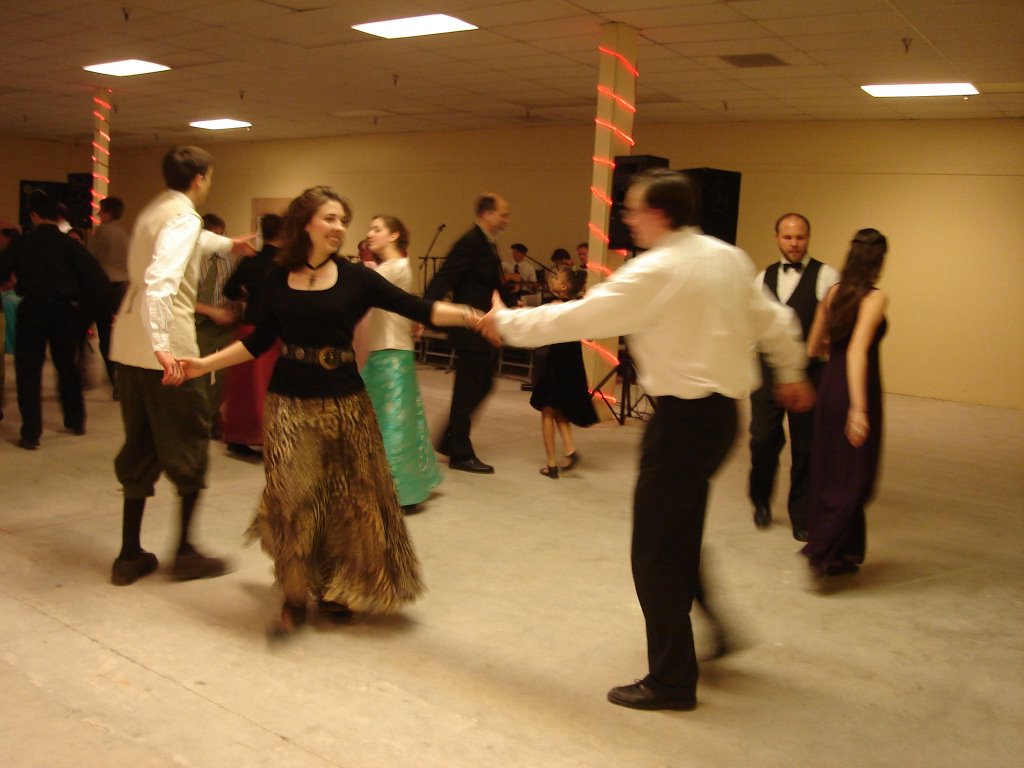
The families and churches that orbit the College remember that building community takes time. Time to work together. Time to dance together. Time to dine together and to linger over the jokes and coffee afterwards. They remember that community can't be built solely between the pew and the door at a once-a-week worship service.

They sing together at the merest excuse - at least as much as Pentecostalists. But this isn't your typical radio-dial praise chorus fest. They sing fugues, chorales in four-part harmony, Geneva jigs, jazz riffs and Psalms in Gregorian chant. This, too, takes time. Often Sunday evening ends with a Psalm-sing including two congregations, in which folks practice singing the challenging music in their psalter hymnals.

Academics were interesting at New St. Andrews, but the most distinctive study offered there is the opportunity to see an old-fashioned community creatively gathered and maintained. Students don't just see it. They are folded into it. About time, too.

A Hungry Worshipper Q & A 2


Pastor Smith sent this lovely excerpt from "Worship: A Royal Waste of Time" by . I thought you'd all enjoy it.

Also check out From Silence to Song, by Peter Liethart. This is an exegesis of 1 & 2 Samuel detailing how worship changed in Israel under David's leadership, and suggesting a framework for planning and evaluating our own changes in worship.

So, A Royal Waste of Time:

What is contemporary music? Do we mean choruses from Taize, pop songs, or
the esoteric music of Krzysztof Penderecki?

The value of their
metaphor of conducting a symphony is that it emphasizes the following aspects.

Unity. Even though a symphonic piece often has three or four
differing movements (usually one or two relatively faster segments and one or
two slower ones), these parts relate to each other. The same is true of any kind
of art; the elements of painting, similarly, must work together – with enough
variety for interest but not enough to make the piece incoherent. Even so the
components of worship must be congruent with each other.
Movements. A
symphonic piece varies widely in mood or tone or tempo between the individual
segments or portions of the piece. Similarly, the timbre of confession and
absolution is vastly different from the spirit in the hymns of praise.
Progression. There is a flow as the symphony progresses to its climax and
ending. So worship finds its high points in the Gospel reading and the Lord’s
Supper, but the liturgy that surrounds them makes a progression from the
entrance into worship to the dismissal into ministry.
The musical score.
There are specific notes to be played. So worship has a theme, usually generated
by the texts assigned for the day or chosen by the pastor. There are numerous
possibilities for the score – thousands of symphonies to choose from, a wide
range of texts. However, the performers must be faithful to the musical score,
even as pastors must be true to the text. (Obviously the analogy can’t be
stretched too far here because a musical score demands note accuracy far beyond
the requirements of worship. Perhaps we can avoid this problem by seeing the
composer of the score as the Church, with its arranger being a particular
congregation’s worship committee)
Diversity. Different symphonies require
vastly different instrumentation. Even so, worship calls for a variety of
musical sounds to display the rich splendor of God.
Numerous styles.
Symphonic music encompasses a wide diversity of sounds and flavors from al eras
and areas – from spare to lush harmonies, from romantic poignancy to marching
brassiness, from jazz to Latin or African rhythms, from European to Asian
melodies. Even so the music of the Church entails gifts from all people of God
throughout time and space.
Relationships. The conductor’s highest loyalty is
to the spirit of the music (for wich the written score and the composer are
valuable guides) – just as the worship leader’s superior authority is God (to
whom the community and the Scriptures are reliable escorts). Other relationships
are also essential in order for the symphony to be played well. A conductor
works together closely with the instrumentalists, just as the pastor and
musician in worship work with each other as team mates, and both work with the
worship committee to plan and carry out the best worship they can craft for the
sake of the particular congregation they serve.
Authority. The conductor
exercises the authority that is necessary for the performance – otherwise each
musician could go his or her own way – and the conductor is chosen for that
position because of his or her understanding of the composers, their music, and
how that music should be interpreted. Similarly, the pastor and musician are
mentors to the rest of the congregation in the art of worship, and out of their
expertise they exercise the authority of choosing and leading the elements of
worship.

Thursday, February 16, 2006

Back Soon


I will be away from my computer for nearly a week. I am checking out a college with my eldest daughter. No doubt there will be stories....

Wednesday, February 15, 2006

Share the Love Awards


Need some reading recommendations? One Woman's World is hosting the Share the Love Blog Awards. Mother-Lode has been nominated in the "Most Thought-Provoking" category. Check out the competition and cast your vote by Feb 20!

I wonder if reading blog award nominees counts as an Olympic sport?

Monday, February 13, 2006

A Hungry Worshipper Q & A


I've received some interesting email on the worship music series. It has led to some good discussion.

Pastor Greg Smith writes:

Given that the Bible does not proscribe any particular
musical style (content yes, instrumentation no); how does contemporary style
music fit into the task of worship; if at all in what you've said. Knowing, as
well, that artists will always use contemporary forms to communicate timeless
messages… and in that experimentation some will be retained and other parts
lost. (I'm not sure there is a right answer… just some guiding thoughts…)


My response:

I agree that the Bible doesn't proscribe any particular musical style. However, different musical styles produce different effects in their hearers. I think that we Christians get into a lot of unneccesary disputes because we ask the wrong questions. The question isn't so much, "What musical styles are acceptable in worship?" but "What do we need to be doing in this part of the service, and what musical form/style will assist us to do it?"

If we think about it, just one musical style can't carry a worship service. What is it we need to do through the service?

Prepare a reverent, awe-filled heart (something contemplative, full of
longing & aspiriation)
Approach the Throne of Grace (something joyful, triumphant, full of anticipation)
Confess sin (something sorrowful)
Give thanks for forgiveness (again, something joyful)
Consider God's Word to us (something meaty that can carry a thoughtful, profound, simple or complex compliment to the message of the day)
Feast at the Lord's Table (something that turns our hearts & minds to grateful contemplation, morphing to rejoicing)

Go back into the world equipped and commissioned (purposeful, joyful triumph,
maybe martial even)


I would like to see believers laying off the musical mud-slinging and banding together, bringing our various skills and preferences under the guidance of the needs of worship. A lot of the ill-will I've seen has come from believers allowing either personal preferences or a desire to please a crowd outweigh the consideration of serving God in worship and assisting fallen men (including ourselves) to draw near to Him.

As a matter of practical consideration, perhaps a discipline of reflection as we prepare for worship would settle a lot of things. We could ask ourselves:
What attitude needs to be supported in this part of the service?
Is this piece the best support for this attitude that we have at our disposal?
Am I just satisfying my own preferences or playing to the crowd for approval?


One last thought. Musical tastes are acquired. Musical tastes can be trained. Worship is largely about changing & maturing those who participate in it. We should be looking for our music to assist this over time as well. We should begin to be able to enter fully into the delights of all kinds of music as we learn its truest use in worship.

Well, I'll get off my soapbox now. Anyone want to heave a squashy tomato in my direction?

Sunday, February 12, 2006

Dustbowl Comfort


Desperately, Maude watched the rare clouds, ripening with their dark heads of rain. Standing at the fence line of her Nebraska farm, she pleaded with God. The wraithlike sheets of moisture folded across her neighbor’s field. A few drops spattered her thirsty boots. And that was all.

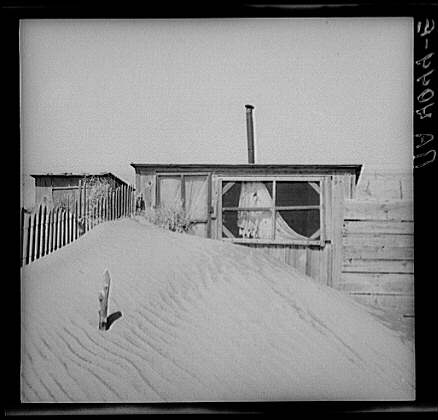
It was a death sentence. They had scooped that death from their door with brooms and shovels through all the booming, strangling dust storms of the previous years. They had drowned it with sweat and tears. But now that rain had returned to Nebraska, there still was no relief for their place.

Today was the last hope. Tomorrow, Maude and Everett would leave behind her family’s legacy; the house where her children had been born; the farm Everett’s father had carved out of the wilderness of his exile from the Old Country and of the Great Plains; the community where Maude’s father had been the original pastor. The car was already crowded with its pitiful load. The furniture would have to be left behind. Everything that wasn’t essential to starting over was too much. Maude was nearly fifty, her youngest child of high school age.

The Claudsons removed to Wyoming’s Powell Valley, where a newly-built irrigation system would make a wasteland arable. They and their grown children had taken the government’s ridiculous offer of a Dustbowl homestead in a valley where the virgin sagebrush stood higher than a man’s head.

But the Claudsons became the heart of that community cobbled together from the dry bones of Dustbowl failures. They helped to establish one of the first churches in Powell. Their little tar-paper cottage was the site of sing-alongs, hunting parties, family reunions and Bible studies. And it boasted the luxury of one of the most beautiful flower gardens in the county.

They dammed up the creek that flowed through their Wyoming place and made a pond. Every winter in the dreariest stretches, they invited the whole church – and everyone else who cared to come – to skate on the frozen pond. Everett would make up a fire on its shore, and Maude would simmer over it an enormous kettle of her homely chili and apple cider to warm their guests inside and out.

Through the generations, our family has enjoyed Great Grandmother Maude’s chili. Even in the leanest times, we can find the ingredients for this simple dish. And in the darkest days, I make her Dustbowl Chili and remind myself that death is not the end. That my forbearers learned to laugh in the face of destruction. And so will I.

Comfort food indeed!

Dustbowl Chili

4 c. dried pinto beans
Sort & rinse the beans. Cover with water. Boil for 10 minutes. Turn off the heat and let the beans soak for 1 hr. Drain.


6 - 12 oz. tomato paste
1 lg. onion, chopped
2 cloves garlic, crushed
3 Tbsp. chili powder
1 - 1 1/2 lbs. ground beef, browned
Add these ingredients to the beans. Cover the ingredients with water. Simmer until beans are tender (at least 3 hours). Add

1Tbsp. salt (if you add it earlier, it will prevent the beans from becoming tender)

If you are in a hurry, skip the soaking step. Put everything in a pressure pan and cook at 12 - 15 lbs pressure for about 15 minutes.

Thursday, February 09, 2006

Defending Home


So Betty Friedan is dead. But her feminist legacy as set forth in her seminal work, the Feminine Mystique, lives on.

Betty Friedan encouraged women to realize that there is more to life than a spotless floor, but she did so by denigrating the institution that could really liberate women: the home. Friedan's view of home as the place where women are trapped into a vicious "passive dependency" (The Feminine Mystique, Chapter 12) inhabited by:


"American housewives – their emptiness, idleness, boredom, alcoholism, drug
addiction, disintegration to fat, disease, and despair after forty, when their
sexual function has been filled"
leaves women with the notion that no intelligent, interested or even sane woman could hope to find useful employment, let alone fulfillment as a wife or mother.

Christians have rightly resisted the masculinization of women, but oddly, many have done so by characterizing the home in many of the same terms as Friedan did. Consider Friedan's description of a woman's life at home:
"Housewives are mindless ... ; They are trapped in trivial domestic routine
and meaningless busywork within a community that does not challenge their
intelligence. Housework is peculiarly suited to the capabilities of
feeble-minded girls; it can hardly use the abilities of a woman of average or
normal human intelligence."


And consider this Christian description urging women to stay at home in order to avoid sin:
"We need to be aware that we may be in danger of becoming a busybody. Is our
house clean? Are our children properly cared for? Is the laundry done? Is our
husband happy? Is that dinner carefully prepared or is it thrown together in a
mad dash to get something on the table at the last minute? Maybe we can get our
most honest answer from our husbands or our children. Will they say, "Actually,
Mom, it seems like you're on the phone all the time." Or "Honey, I asked you to
make sure my laundry was finished. But it seems you were on the computer too
long today because I have no clean underwear....A busybody goes from house to
house "tattling." We can go from "house to house" in many ways these days! We
have the telephone, fax machine, grocery store, homeschooling groups,
playgroups, church, and the most dangerous - email!!!! "

The difference is that Friedan thought it was a bad thing, and these Christians think it is wonderful.

While we can respect the patriarchal-Christians for their desire to obey Scripture, we must not simply take their interpretations uncritically. We will hardly entice women back home if they think the most challenging thing there is making sure her husband has clean underwear. Or if they fear that the normal commerce of life is the siren-call of sin, and that learning will make them proud, lazy busy-bodies.

Women today need a new liberation - a liberation from the idea of home put forward both by the feminist movement and by uber-patriarchal Christians. Defending Home will become a new series here, exploring the flawed pre-suppositions of feminism and scouting out the real scope of home. Along the way, we'll meet some more Professional Mothers, women who understand that in fundamental ways, home is the truest hall of power, the sweetest call to service and the loveliest work of art.


What are you doing from home?

Monday, February 06, 2006

There is more


In the intellectual mileu of contemporary culture, there's a lot of homage paid to the eastern idea of contentment. Indifference as contentment. Numbness as serenity. Death in life.

Some days this idea looks like a good alternative to feeling the longing and disappointment that are part of living in a fallen world. You know the days I mean. The days of caring for a demented aging parent while the relatives, who should be helping, criticize. The days of training a child who refuses to seize on anything or who rejects God's ways. The days of loving someone God has irrevocably placed in your life whose needs and demands are never satisfied. The days of praying without seeing an answer.

Eastern deadness provides a way to endure with patience trials of this sort. "I can stand it because nothing matters." "I can stand it because everything is illusion." But it is just that - death. Escape from reality.

Christ on the cross refused the draft that would have numbed His sensibilities and lessened His pain. He refused to escape from reality. He endured because He had a larger sense of reality. This present suffering is not the last word. It's not the whole picture.

Christian contentment does not consist of going numb (we miss the joy as well as the sorrow). It does not consist of minimizing reality. It consists of affirming that there is more. There is a heaven and an eternity in which longings will be fulfilled and sufferings will not only make sense, but will bear fruit that could not be seen from here.

Christian contentment is a journey to a larger world. There is more....

Thursday, February 02, 2006

Ladies in Waiting


Visiting friends in the blogosphere, I came across Radical One's request for encouragement for her teen-aged daughters who are finding most of the young men in their circles too passive to initiate a relationship, and generally unpromising as future mates. They are feeling lonely and isolated. They are wondering if they should initiate things or???

I, too, have two teen-age daughters who have struggled in many of the same ways as yours have. They are no strangers to feeling isolated by their resolve to remain fully who they are and fully feminine. And there are several things that I think they would say have helped them.

1) Stay away from church youth groups that center on entertaining the young people and/or are full of teens couple-ing up and changing partners frequently. This just brings the romantic stuff to the fore before its time. None of these kids are ready for marriage. They are playing with fire. And it makes young people who are centered on preparation for real life look and feel so terribly isolated.

2) Seek to get acquainted with young men in the context of working on a project that your daughters are passionate about. Work normalizes a relationship. There is a common goal, something beyond merely looking into one another's eyes and sighing. Work gives both young people a glimpse into the ordinary exercise of their strengths and weaknesses. Work often involves families, which allows everyone concerned to see each other in their natural settings without the pressure of courtship or dating. Work gives everyone the freedom to complement and to enjoy one another without a romantic context.

3) Find friends both male and female who will strengthen your resolve to wait. Check out the wonderful teens who make up the community centered on the Rebelution website. http://www.therebelution.com/

4) Remember that there are worse things than being lonely. Namely, being surrounded by people who mock your resolve or encourage self-centered foolishness. And there are far worse things than being single. Namely, being married to a man who is uncomfortable with his masculinity or with your femininity.

5) Resist the temptation to view the time before marriage as primarily a time of waiting or of being warehoused. There are vitally important things that young women need to be doing while they have no pressing responsibilities to a husband and children. There is no waiting for life to begin. There are only ever-widening spheres of influence. This is a concentrated time of preparation and productivity.

What are your secrets to raising powerful, contented and feminine girls?

Wednesday, February 01, 2006

Exonerating the End of the Spear


Hurrah for our side! Randy Alcorn at Eternal Perspectives has done what someone with access to the folks at Every Tribe Entertainment should have done long ago. He has actually talked to the Christian brothers at ETE to ask for their perspective and rationale behind hiring Chad Allen for the major role in End of the Spear.

I could rehash it again, but you can read it from the original source. He has posted his
interview and an excellent commentary at Eternal Perspectives.

Suffice it to say that most of the reports that ETE knowingly hired a homosexual to play Nate and Steve Saint were echoes of the
Sharper Iron blog, which quoted what the homosexual magazine the Advocate said about the hiring. I had been part of spreading that story. I want to be part of setting it straight, as the author of Sharper Iron, Jason Janz, is currently working to do.

If you read my post, Falling on Our Own Spears, please be sure to read Randy's healing articles at Eternal Perspectives. And please pray for the families who have been hurt by the controversy.

Tuesday, January 31, 2006

Gentlemen?


Is there anything more rare than a truly gentle man? Or more wonderful? He's the guy who could kick the door down - and has been sufficiently provoked to justify it - but he won't. Instead, he shoulders the provocateur aside with sublime indifference and holds that door open for his sister.

He refuses the temptation to pick petty quarrels. He scorns the invitation to scorn. His mind and heart leave mere self indulgence in the dust of his initiatives to serve and to build. He looks beyond each irritation or setback for the opportunity to rescue another - especially when no one is looking.

I've been considering how to recover this ideal concretely for my son. My pastor says that boys need to be filled with visions of what we want them to achieve. Lacking loads of examples in contemporary society, we turn to former ages, when they drew their portraits from life.

If your boys haven't read Beau Geste by P. Christopher Wren, run, don't walk to the library to get it! The four main characters, two orphaned upper-class English youths and two retired Texas Rangers, are just such gentlemen. They sacrifice their lives to protect the honor, peace and safety of an elderly aunt, a foolish girl, fallen comrades and the manor's poor. Sounds like a sentimental morality play, but you'll laugh till your face hurts. (Dickens would neither understand nor approve.)

Second-Hand Lions is a recent movie in the same vein. The two old brothers remind me poignantly of my Grandfather and great uncles. The brothers find new purpose at the worn-out end of life protecting a scrawny, un-promising boy from criminal neglect and teaching him how to be a real man.

So much for visions. I'm taking a page from my dear friend's book to give our sons a feel for taking care of others from a masculine perspective. She helps her son practice in public by giving him the father's role in the father's absence. For instance, she sends her son to the grocery register or restaurant counter with the money and everyone's order rather than doing it herself. She asks him to lead in prayer when Dad is not around, and encourages him to provide masculine comforts to the family, like lighting a fire or grilling the chicken or seeing what's broken and fixing it.

It has often been noted that Jesus was a gentleman, but it is not often enough understood to have been a radical posture. He treated women like real people. His expressed concern during His final extremity was for the welfare of His mother. He spent His life refusing the provocations of men, institutions and demonic powers, determined not to be diverted from doing all the good His Father sent Him to do. Sure, He could have kicked the door down, leveling the corrupt religious and political officials. But instead, He shouldered His provocateurs aside with sublime indifference and held the door to eternal life open for His Bride.

Share with us your best ideas for raising gentle men.

Monday, January 30, 2006

You're It!


Someone should do a sociological study about the games people invent to play on the internet. I'm not talking about the ubiquitous game sites that dot the ether like Las Vegas casinos. I'm talking about the virtual equivalents of Kick-the-Can and Hide-and-Seek. Being tagged for a meme lets you know just which block you can play on, and reminds you not to take this blog stuff so seriously....

Carol at She Lives says its my turn to be IT.

Four Jobs You've Held
  1. Music teacher
  2. Crisis pregnancy counsellor
  3. International homeschool consultant
  4. Silversmith

Four Places You've Lived
  1. On my Great-Grandparents' Wyoming homestead (OK, only for a month in the summers when I was growing up, but it was deeply formative for me.)
  2. In a steamy Washington, DC suburb apartment
  3. At the foot of the Rockies in Colorado
  4. Narnia, Middle Earth, Trantor, Neverland, Athens, Troy, Jerusalem (No these were not vacations)

Four Vacations You've Taken
  1. Snowmobiling in Yellowstone Park
  2. Sailing up the Chesapeake Bay
  3. Visiting friends in Moscow, Russia
  4. Reading, hiking and Scottish Country Dancing in Estes Park

Four Vehicles You've Owned
  1. A 10-speed racing bicycle (the wonder of my 12th birthday)
  2. A 60's vintage VW bug (came with my husband)
  3. A remote control Lego stealth-robot (but I had to give it to my son for his birthday)
  4. An eccentric, elderly Taurus wagon

Four Blogs You Want to Visit and Tag
  1. Iris at Sting My Heart
  2. Deb at On the Vine
  3. Any of the artists at SoulperBlog
  4. Karen at Got Me A College Girl
Can you come out and play?

Saturday, January 28, 2006

The Resurrection of the Body


There is a macabre new exhibit en route to the Museum of Nature and Science in Denver, BodyWorlds 2: The Anatomical Exhibition of Real Human Bodies. These are the plastic-infused bodies of people who donated their bodies to science, displayed in various stages of dissection.

This raises some interesting ethical questions. In the past, people have carefully disposed with the bodies of their dead because they believed that there is something beyond the merely physical about a human being. We have collectively abhorred cultures and individuals which have discarded or eaten their dead. Even now, we recognize some ethical discomfort over displaying centuries-old mummies. The Christian West has even frowned upon cremation, looking forward in its funerary traditions, to the resurrection of the body. So what's up with this display, reported to be one of the world's most popular traveling exhibits?

Is this the ultimate declaration that a human being is exclusively a bag of chemicals? Nothing more than matter? Is it an invitation to understand and to marvel at the wonder of the workings of God's creation? Is it merely voyeuristic? How would one express respect for the people who inhabited these bodies in an exhibit of this kind?

I'd be interested in your thoughts...

Wednesday, January 25, 2006

A Hungry Worshipper Part 3


To conclude this little study, let's consider how to get from here to there.

This aesthetic leaves a great deal of freedom. But it is largely subjective to the musically untrained. We as a people first need to be trained in worship, by being led and educated by those who have musical training and have studied worship specifically. When a bank wants to train its tellers to recognize counterfeits, they begin by having the tellers handle lots and lots of real cash. Then when the counterfeit passes, the trained hand feels the difference even if it cannot tell precisely which forging techniques were used. This is the same idea. Let people practice lots of thoughtfully and Biblically constructed worship under the direction of ministers who have wrestled with this, not in light of what pleases men, but in light of what pleases God. Then we will recognize the real thing and resist the counterfeit.

The goal is to have a NATION of priests, everyone understanding what is good and beautiful and acceptable in God’s sight, not to perpetuate a hierarchy of snobs.
1. Training in what to sing, how to worship
a. Learn God’s forms by singing Psalms and other songs recorded in Scripture. Not because nothing else is acceptable, but so that we can learn what delights God, and look for other things that have the same life, and even make them ourselves.
b. Study worship as a congregation, especially concentrating on the forms God established and embellished through history, including the glimpse of heavenly worship in Revelation.
2. Training in music itself.
a. Congregations need an accomplished, trained leader. (I Chron 15,16) Note the Davidic requirements for musicians serving the Lord.
1. Musicians were Levites (15: 16-24), i.e. paid members of the priestly tribe. In Nehemiah’s day, not paying the Temple musicians was a serious enough offense that the administrator who withheld their pay was deposed and publicly humiliated (Neh 13:4-13).
2. Chenaniah, the leader was skilled enough to be a teacher (15: 22).
3. They were full-time. (16:6, 37)
4. They were mature adults (I Chron, 23:3), numbered for service assignments from age 30.
5. They were purified and set apart for their work as any other Levite. (Num 8:5-14) And so must any of us purify our hearts if we expect to offer acceptable praise to the Lord.
c. Leader should be able to train others and to screen worship music. Apparently, even David submitted his poetry to the appointed Levite in charge of music before it was used in worship (see Ps headings).


I look forward to the day when Christians will join together gladly in glorious worship that is both pleasing to God and nourishing to men.

Monday, January 23, 2006

Falling on Our Own Spears

“If the trumpet gives an uncertain sound, who shall prepare himself to the battle?" (I Cor.14:8)

My thanks to Spunky for pointing me to the controversy surrounding The End of the Spear. Spunky wrote in a comment to my post:

I was all excited about seeing this movie until I heard that Chad Allan is gay
and an outspoken advocate for the gay lifestyle. He is using his noteriety from
this film to promote his gay lifestyle. I am now very conflicted. I want to see
this movie but the idea of watching him play Nate and Steve Saint clouds it for
me greatly. I don't know that I can sit through the movie without wondering what
Nate would be thinking about who played him.

It’s true. Far from giving Christians an opportunity to join together to celebrate the victory of Christ in the Waodani culture, and to make a statement concerning their preference for wholesome entertainment, Every Tribe Entertainment has handed us yet another opportunity to appear contentious and narrow-minded on the one hand or welcoming to the gay agenda on the other. (Of course there is always the clueless option, which was mine last week.)

In casting a gay actor to play Nate Saint and his grown son, Steve, Every Tribe Entertainment not only knew of the actor’s sexual preference, but also knew of his activism. So apparently, ETE wanted this controversy, mistakenly equating the reconciliation between the missionary families and the Waodani killers with a reconciliation between the Christian and the homosexual communities.

This equation cheapens Christ’s victory in the Waodani tribe, because while homosexuals take pride in flauting God’s ways, the Waodani had repented and renounced their destructive ways. So the reconciliation between Steve Saint and Mincayani was a reflection of their true reconciliation to God. But a “reconciliation” between Christians and unrepentant homosexuals would only be an accommodation of sin.

The message is not the messenger. If we insist on only considering art produced by stainless artists, we will have to live in the wilderness. However, from this vantage point, I am very conflicted about recommending this movie. It is a powerful story of the triumph of God’s love over a savage, hopeless people. And it is beautifully, intriguingly executed. But ETE has courted this controversy rather than fleeing unnecessary conflict.

If you need more information to make your own decision, try these links:
Albert Mohler

Sunday, January 22, 2006

A Hungry Worshipper Part 2


Today, I'm continuing my meditation on worship and music. I'll conclude in the next post.

What is your belief concerning worshipping in spirit & mind? (I Cor 14:14-17) Does this verse apply to music? If so, how?
A. I Cor 14:14-17 Paul’s admonition
1. Paul addresses the Corinthian’s practice of using the techniques of the pagans to arrive at a spiritual/emotional state of excitement in worship, which leaves behind understanding. We observe the same techniques today in use among the cults. Use of same chanted or spoken phrase over & over until a trance-like state is induced.
2. The same effect is observed when in Christian worship, a short chorus is repeated over & over to produce elevated emotional responses. The emotion isn’t the problem. The lack of content/understanding, according to Paul, is. God’s Holy Spirit isn’t truly manifested unless our spirits, minds and emotions are fully engaged. Worship ought to be one of the most intense emotional experiences of life, but the emotional aspect isn’t the focus of worship, it is a side-effect of worshipping well.
B. Application to music
1. God has included in His word a hymnal – the Psalms. If we want to learn how God likes to be praised, we ought to look at the songs He wrote Himself. (not advocating only Psalm –singing. But we ought at least to be familiar enough with the Psalms to model our praises on them)
2. Characteristics of Psalms
a. Complex ideas (Ps 136) even when repetition is used.
b. Deep emotions: pain, sorrow (Ps 137, 130), wonder (Ps 8), exultation (Ps 46). Not surface, smiley-faced ditties. Not merely sentimental.
c. Focus on God’s character, work, & intervention rather than our goodness, works, our feelings at the moment, etc. It’s an education in Who God is.
3. These Ps engage the whole person. They do not appeal to any one aspect of our psyches at the expense of any other. In true praise, we offer our whole beings to God as a “living sacrifice.”(Rom 12:1-3)
4. Surely this is part of what is meant by, ”they that worship him must worship in spirit and in truth”(Jn 4:23), that is, with mind, spirit, and heart in balance. Jesus said this in answer to the woman at the well, who asked Him to choose between the dead tradition of then-current Jewish worship and the pagan syncretistic worship of the Samarians. We are in a similar position. Much of traditional conservative worship is simply dead, but much of more charismatic worship is a syncretistic blend of modern Hollywood, pagan methodology and Christian lyrics. Jesus refused to choose either, but instead pointed her to the character of God, the truth of His Word, and His work in men’s behalf. (Jn 4:21-24) We would do well to use the same standard.

III. Does biblical worship demand a certain aesthetic in worship music? If so, what are its characteristics? How can we insure that we accomplish this aesthetic norm?
A. Check biblical examples of worship – (I Chron.15,16; Rev) We aren’t bound to some outdated, legalistic reenactment of ancient forms of worship. However, if we want a biblical basis for what we do, “proof-texting” won’t help. We must study the forms God laid out for us and apply the principles of those models to modern life.
1. Biblical songs use great variety of musical forms: antiphony (Ps 136; Neh. 12: 31-43, 2 choruses on each side of the city atop the wall), unison (2Chron. 5:13 musicians played as one at dedication of Solomon’s Temple), processional chanting ( 1 Sam 10:5, Ps 68: 24-26), sonata (Rev 4:8-5:14 exposition, 4:8-11; development 5:9-11; recapitulation, 5:12-13).
2. The Bible records the use of a great variety of musical ensembles: whole congregation accompanied by instruments (I Chron. 15, 16; 2 Chron. 5, Rev 5: 11,12), men’s chorus with instruments (Rev. 5:8-10), men’s & women’s chorus answering antiphonally (Ex 15:20), duet (Judges 5 Deborah & Barak, this was informal worship).
3. Bible is largely silent about music theory, however, there are a number of musical types which are censured. These tend to be described in a manner which is accessible to all kinds of readers, both those who are musically trained and those who are musically illiterate, namely they are described by their effect on the worshippers.
a. Ex 32 – Israelites’ orgy around the golden calf. Music produced chaos, breakdown of morals, frenzy, “noise of war” (v. 17 &18)
b. Amos 5:21-6:6 – Israel offered worship offensive to God including music that encouraged sensuality, selfishness, and self-sufficiency; and suppressed the passion for justice for the afflicted and for righteousness in general. The particular focus seems to be the actual music, rather than the words.
B. Application to modern worship aesthetics
1. As the Bible records with commendation a great variety of musical ensembles, including both vocal and instrumental musicians, and both men and women, we must do likewise.
2. As the Bible records a great variety of musical forms without any pejorative, we must also take care to admit a variety which will musically carry all the themes appropriate to worship. As the Bible also records some kinds of music that are actually offensive to God, we must be careful to discern and exclude those types of music as well.
a. Music, like the entire worship experience, must draw attention to God, not to the performers or worshippers. (See the biblical lyrics we have just studied.) This is why traditionally, choir lofts have been above, behind or screened off from the congregation, and the communion table, cross & Bible have held the center of the sanctuary, with the pulpit for man’s commentary to the side.
b. Music itself must carry the words. Majestic words, majestic music. Sad, disturbing music for mourning over sin, etc. Complex ideas, deep emotions not well suited to simplistic, overly repetitive, or sentimental musical phrases. The music as well as the words must reflect the character and work of God.
c. Just as biblical worshippers had to bring the most perfect offering they could find, so we must bring only the most well-written music we can find, led by the most skilled musicians we can find. Good writing is characterized by
1. Distinctive melodies, without excessive repetition
2. Rich harmonies, without excessive predictability
3. Subtle rhythms, subordinate to and supportive of the melody & harmony

Friday, January 20, 2006

Cutting Edge Culture


Chloe over at CatchWord has a good suggestion for this weekend: go see a movie. Actually, go see a particular movie, one that was produced and promoted completely outside of Hollywood, but promises to be a Christian blockbuster.

End of the Spear is the feature film about the Jim Elliot/Nate Saint effect among the Waodani Indians of the Amazon. It focuses on the incredible personal and cultural reconciliation brought about by the missionaries' sacrifice on the banks of the Amazon. See the preview trailers here.

The issues of nudity and violence have been tastefully handled, but the story is quite intense, so the film deserves its PG-13 rating. Your young teens will be inspired, but your younger ones may be overwhelmed.

So thumb your nose at Hollywood. Go see End of the Spear this weekend. Show the Hollywood establishment that a HUGE population of movie-goers would rather see a powerfully wholesome film made by wholesome folks. But, most of all - Enjoy!

Wednesday, January 18, 2006

A Hungry Worshipper


Deb over at On the Vine has been doing some interesting work on worship. She writes of her longing for an intensity and nourishment in worship that has been largely lost in our day. I can certainly sympathize!

Evangelical Christianity's current passion for meeting unbelievers where they are and serving their needs has some disturbing repercussions for worship. Believers like me (and Deb) feel starved even after a full Sunday of worship. So, where to turn when men fail you? I'm looking in the Scripture for guidance, and invite you to come along.

Some Thoughts on Music in Worship

I. Why do we sing in worship? What is accomplished?
A. Why do we sing?
1. Short answer: Because it is commanded. (Ps 33:1-4, 47:1-7, 81:1-4, 100) If we believe that first & foremost we must honor God in our worship, and not merely please ourselves, then His commands regarding worship must come first in our consideration. Before what it does for us, before understanding how it fits in…. It would be enough for us that He commands singing, but it is not an unreasonable requirement.
2. Why is it commanded?
a. Worship is to be a time when God’s people gather before His Throne to remember, to celebrate and to renew His covenant with them. It is a formal occasion for us as a body to joyfully say ‘Amen’ to His gifts and to rededicate ourselves to His service. It is the primary time when we come together as a family and He comes to us as King. It is not an ordinary event. (Yes, we ought to have more intimate times with God as our Father, but those ought to be daily. Every king’s son must sometime come before his father’s throne and treat him as a king as well as a father. Sunday morning worship is that time for us.) Therefore, it is appropriate that we should use extraordinary means of communicating our response to God. We should not only SAY, ‘How nice!’ We should SING, ‘Alleluia!’
b. Notice in the Ps we just saw, the commands to sing praise are connected either to the fact that singing is the response appropriate to God’s people because of who we are (Ps 33:1 “praise is comely for the upright”..), or it is appropriate because of who God is (Ps 47:1,2 “For the Lord most high is terrible; he is a great King over all the earth.”), or yet again, it is appropriate because of what He has done (Ps 47 continues with His ruling all the earth.. Ps 100 He is our creator, our shepherd. Ps 34 David calls, “O magnify the Lord with me, & let us exalt his name together,” and rehearses how God delivered him from his enemies..)

B. What is accomplished?
1. We please God by offering praise & honor in the way that He commanded.
2. We engage with God and His gifts to us as participants in His command performance, rather than as spectators at an entertainment event in our honor (congregational singing).
3. We engage our whole selves in response to God’s person & works – body, mind, emotion, spirit.
4. We engage as a body rather than as individuals, i.e. we respond to God’s covenant as a covenant body. It unites us in praise. (congregational singing)
5. We are assisted to lift fallen, resisting hearts to the task of worship (‘special’ music).
6. We are given God’s word on the tips of our tongues, assuming we sing Scripture and right doctrine. Music is a memory aid.
7. We are trained in courtesy and beauty, not only to give honor to God, but also to give honor outside worship to whom honor is due.
8. We are given a glimpse of the glory of the King and His Kingdom. This strengthens us to go out into the everyday world and do the works of our Father.

LinkWithin

Related Posts with Thumbnails