Tuesday, March 21, 2006

Food for Thought


Robert Capon, in his book, The Supper of the Lamb, considers a perfectly excrable bottle of synthetic Kirsch.
"Every now and then, I take another sip, partly to remind myself of what a
paragon of awfulness it is, but partly to prove that for all its faults, it is
still not undrinkable. In a real world, nothing is infinitely bad. My bottle of
bogus Kirsch bears witness that there is no bottomless pit in any earthly
subject ... The Kirsch in my closet is a little hell..."

Interesting take on hell. All its pains are closed in there - like that bottle of Kirsch. And when you taste it, you realize that nothing else could be quite as bad as this.

Surely, God leaves us all little reminders like this one, that though this is a fallen world, it is not ultimately as bad as it could be. Time closes in its pains, and one sip of Heaven will wash away even the memory of that insecticide that passes here for Kirsch.

Friday, March 17, 2006

Professional Mothers: Charissa

You might be interested to know that The Washington Times is declaring a victory in the "Mommy Wars". According to their editorial page, children are winning!

Last time, in our series of introductions to real-life 'Professional Mothers', we met a woman whose wisdom and energy are impacting both the present and future generations across the nation as a result of her work with her own children. Today's Professional Mother is one of the principal organizers of an annual speech tournament which is open to homeschoolers from the entire nation. This tournament is held at one of our country's most respected and most liberal college campuses - Charissa's alma mater. Charissa does it to give her own children opportunities for skill-building and networking, but an unexpected fruit of her labor is that the highly feminized young women from the college are forced to "re-evaluate their negative ideas about stay-at-home wives."

Charissa is a stay-at-home mother of four, who lives in a mountain community in rural Colorado with the requisite chickens, etc. From home she not only administers a lively homeschool for her own children, but coaches speech and debate, and teaches a rotation of in-depth literature courses for other homeschoolers from several isolated communities. Annually, her family organizes and directs theatrical productions for their town through their church.

Mother-Lode: Did you purpose to become a mother? Why or why not?
Not to begin with. I grew up in a feminist-leaning home and was groomed to go on to career. I intended to work in the foreign service and then changed my mind and planned on law school. It wasn't until after I'd met my husband, who brought me to faith in Christ, that I considered motherhood as an option. As the idea of staying home to care for babies, and subsequently to homeschool grew, I had a difficult time overcoming the societal and family expectations that I go on to do something bigger than JUST raising kids. I struggled with competing ideas of who I was and was to be. I was a Truman Scholar, and as such was encouraged--no, expected--to go on into something significant in government service. Each year, I received a questionnaire from the scholarship foundation about what boards I was a member of and what public service positions I held. Finally one year I wrote them a dissertation explaining that I had a greater influence on the lives of my four children than I could ever have on the lives of anyone if I were out working in any of the fields they expected me to be in--that raising responsible citizens was, in fact, public service in its strongest form. They quit sending me the questionnaires.

Mother-Lode: When and how did you begin to prepare yourself for this life's work?
I don't know that I was prepared when I went into it. Rather, God has been faithful to send me people who gave good advice and who were good examples at each step along the way. My husband have made a number of somewhat counter-cultural decisions in the raising of our children without really knowing what we were doing, but later have been able to see the benefits of our choices and been grateful for God's leading in these directions.

Mother-Lode: If you went to college, do you find that your college degree has been a help to you in your work as a mother? What would have been lacking in your home if you had not pursued college?
Though I have never actually worked in my degree field, college was a time of growing up for me. It was a time of learning how to think clearly, find information I needed, and move forward even when I wasn't sure how to do something. All of these have been a huge part of my handling of my home and my children. Mother-Lode: In the course of your work as a mother, what kinds of things have you done? How can such a question be answered in less than 100,000 words? I have changed diapers, gone for walks, looked at bugs, read thousands of stories, cooked tens of thousands of meals. I have planned school, revised the plan for school, adjusted the plans for school, and taught by the seat of my pants. I have encouraged, corrected, scolded, hugged and loved. I have tickled, laughed hysterically, cried for hours, regretted, and tried again. I have learned that no two children are alike and what works with one will be an utter failure with another. I have planned programs for many children because I wanted them to happen for my own. I have grown up as they have grown. I have seen them move on to things that I can no longer help them with. And one day soon, I will watch them leave.

Mother-Lode: Have you found your work as a mother narrows your opportunities or confounds your work for and in the community?
NO! A narrowing of my opportunities might be welcome! Rather motherhood has led me into forms of service that I would never have found, nor considered if it weren't for my children. I have met many people because of something my children were involved in and had many opportunities both to share and learn from these people.

Mother-Lode: How would you advise a young woman about to graduate from high school?
I would advise her to think carefully about where she is going and ask God constantly for His guidance. No two of us have the same path before us, and we have to listen for direction. I would suggest that she consider marriage carefully--and know beyond a doubt that it is a permanent decision.

Mother-Lode: What have been the returns of your labors as a mother?
I have grown and learned more than they have. I hope that each of my daughters has the opportunity to be a mother, as I doubt anything else can possibly mature and grow them as much. The only problem with this job is that it’s a little low on vacation days and sick leave.

Mother-Lode: If you had it to do over again, would you make the choice to be a professional mother?
Absolutely. But I might do a few things differently along the way. One hard thing about this job is that it takes 20 years or more to find out if you've got it right or not.

Thursday, March 16, 2006

Spring Break Reading


Spring Break at our house isn't actually a lazy experience. It usually involves a lot of digging in the garden, new business initiatives and debate tournament excitement. But we do manage to get in a bit of extra fun reading. (Well, actually that goes along with the digging; we task one laborer to read to the rest while we do the drudge-work.)

So, what are we reading? Starting indoors, we will be reading Regenerate Our Culture, the teen-run webzine that launched yesterday. William Buckley's New Republic should watch out, Regenerate Our Culture is literate, engaging and well-researched.

Next, an e-book, Secrets of Successful Homeschooling. Who are you and why are you thinking of homeschooling? A single parent? An organizationally challenged mom? A mother of dozens who is tired of answering the “do you know what causes this?” question? An experienced teacher looking for fresh ideas? Secrets of Successful Homeschooling lets you hear from a chorus of different lifestyles and even different countries on the hot topics in the how-to’s of homeschooling.

In Part One you’ll read the stories of several homeschools with different challenges, and glean innovative ideas about how to handle the bumps in your road. For instance, though I am not a single mom trying to do everything for my household, I still use Teri Camp’s idea of making my children part of the team every day.

Part Two gives you an insider’s look at learning styles, homeschool categories and a translation of all those buzz-words: the Principle Approach, the Classical Method, Un-schooling, Unit-studies…Many of the chapters link you to resources and research.

So hurry on over to Spunky Homeschooler and order Secrets of Successful Homeschooling. Since it is an e-book, you won’t even have to wait for the postman. You could be reading it tonight!

And what will we drag out to the garden? We'll take a cookbook. No, really! But SUCH a cookbook! The Supper of the Lamb, by Robert Capon, uses reflections on food, hospitality and the Old Testament sacrificial system to expound the Divine banquet to which our God invites us. We'll undoubtedly skip the 100+ actual recipes, and opt for the meditations on beauty, love and Divine purpose.

And when we get too hungry, we'll revisit Christopher Wren's Beau Geste series: Beau Sabreur and Beau Ideal. They are all out of print, but well worth the hunt. You'll laugh and cry at the self-deprecting self-sacrifice of the Geste brothers and their French Foreign Legion cohorts, the elegant Major Henri de Beaujolais and Texas Rangers Hank and Buddy. Mystery! Intrigue! Romance! Sand! and more than their share of desert cafard (madness).

Happy reading!

Saturday, March 11, 2006

Professional Mother: Jeannette


Last time, we met Lucy, a professional mother who focused on training her high school daughters to impact local charities and local politics, while remaining firmly in touch with the urge to bake cookies for the little ones. Clearly an "unimportant and uninteresting" pursuit, not worthy of a highly-educated woman, according to Linda Hirschmann's feminist standards.

Today, I'd like you to meet Jeannette, one of the poster-moms for
professional motherhood. A Truman Scholar with a B.S. in Family Relations and Child Development/Home Economics Education and Community Services and an M.S. in Family Resource Management, Jeannette had been one of those highly successful "I'm going to have it all" career moms. But when she saw that her children were paying for her success, she came home.

Now, years later, she has just launched her first (incredible) young offspring as the top National Merit Scholar of his graduating year, and is guiding her daughter toward graduation. Her teaching efforts were even recognized by the College Board, when they named her last year's Presidential Distinguished Teacher. Her outside interests may have decreased since her career-mom days (this is actually doubtful), but now she only takes on projects that directly benefit her children and their relationships together. For instance, she is on the board of Oklahoma Christian Home Educator's Consociation; she is the principal advisor for her daughter's project: the International Debate Society; she was her husband's campaign manager for state office, and continues to be his business partner. And, together with her son, she shares what they have learned in their successful bid for scholarships and college entrance, as conference speakers and college consultants in their new business venture, Aiming Higher Consultants.

Mother-Lode: Did you purpose to become a mother? Why or why not?

I honestly did purpose to be a mother at a very young age. I saw in my own mother a quiet dignity and a manifestation of the high calling of motherhood. She was an educated woman, who valued me enough to give up a career to nurture my siblings and I. I saw her sacrifice and realized as a young child that I was who I was because of it. When my friends were struggling, I was safe and secure in my mother's constant care.

Mother-Lode: When and how did you begin to prepare yourself for this life's work?

In junior high and high school I continually asked my parents questions about parenting. When I finally went to college, I remember the day of enrollment when I presented myself to the Department of Family Relations and Child Development. When asked what I wanted to study, I replied, "I want to understand what makes people tick." The woman smiled and said, "Well, that should take at least a Ph.D." I spent the next four years studying the dynamics of development and human relationships. I also conducted research dealing with adolescent television viewing that radically shaped my current parenting beliefs. After graduating with my masters degree, I spent 10 years with the Cooperative Extension Service teaching classes across the state emphasizing the importance of family. During that time, I was constantly watching the parenting style of the 4-H parents I worked with and learning from them. I also read voraciously about child development from the time I conceived my first child up to the present. I never did get the Ph.D. Instead, I started a family which ultimately taught me more than a dissertation ever could.


Mother-Lode: How do you find that your college degree has been a help to you in your work as a mother?

My degree, college experience, and early career experience trained me in many areas such as leadership, writing and speaking skills, the dynamics of group relationships, etc. that has helped me to better equip my children to enter the world. I believe it gave me the confidence to choose an ususual path in the rearing and educating of my children. The obstacles did not frighten me, just made me more determined to suceed.

Mother-Lode: What would have been lacking in your home if you had not pursued college?"

College definitely broadened my horizons, opened up possibilities to me that I never knew existed. Because of that, I had a vision for my children\'s future that far exceeded my own experiences. I am not by personality or temperament a visionary, but because I was stretched outside my comfort zone during my college and career years, I have developed the ability to speak vision into their lives and have the skills and courage to do battle when necessary to keep their dreams alive.


Mother-Lode: In the course of your work as a mother, what kinds of things have you done?

I have honestly gloried in baking cookies with my children and spending hours reading out loud. I have designed unit studies, set up scientific experiences, run political campaigns, founded speech and debate clubs, taught public speaking, run homeschool support groups, taught boy scouts, been a homeschool conference speaker, started a consulting company, and helped run a farm and construction business.


Mother-Lode: Have you found your work as a mother narrows your opportunities or confounds your work for and in the community?

Suprisingly, my work as a mother has opened up many experiences to me that I would never have sought out for myself. I am naturally an introvert, but because I know my children need certain experiences to stretch them, I walk alongside them and am stretched myself. Being a good mother routinely calls you outside yourself. In my drive to make my children better people, I become a better person as well.


Mother-Lode: How have you dealt with the feminists' view that a career is all-important for the full development of women, and with the pull of careerism in your own life?


Even though my degree was in a traditional field, I found that the feminist viewpoint was more pervasive there than most fields. They did acknolwdge that cookies needed to be baked, but maintained that you could hire someone to do it for you so the children would have homemade treats! It was pretty incredible. In total, I spent 15 years working with and for such women and had many friendships there. But there was something unspoken in their stories, a deep seated pain that would flash out occassionally in their eyes. I began to see through the ruse. I saw the fatigue, the marital strain, the children suffering. By the time I left the professional world years later, my health was shot, my marriage in trouble, and my children struggling. It was a horrible time.

But the Lord, in his mercy redeemed the years the locust had eaten. He renewed my marriage and restored my children. Life is good again. Not easy, but good. We have paid a high price financially for me to be home to minister to my family, but my husband and I both know now that life becomes hopeless when someone is not there to keep the home fires burning.

I can now look feminism straight in the eye and not flinch because I've been there, done that. I know without a doubt that the grass is not greener on the other side. Some of my acquaintances, who were denied that opportunity for growth as young women, have entered middle age with dreams of a glamorous career and all they've missed. I've seen them leave husband and children in pursuit of a lie and I grieve for them.

After my experiences, careerism holds absolutely no allure for me. There have been moments when a friend is recognized professionally and there is a catch in my throat for what I could have been, but then I look at my children and what they are because of my choices. And it is a choice. You cannot have it all. And then the dust clears and I take an analytical look at what I have become after leaving the career world and realize that my experiences have shaped me into something far more than the narrow confines of a professional career could have done. My skills are more highly developed, my experiences much more varied, my world much larger. It is then I pity my friends who settle for the straight jacket of professional recognition.

So, as I enter middle age, I do not feel the call of careerism, but do feel the call of creativity. I am almost finished with the creative aspect of teaching my children and something new is forming in the depths of my being. I know the Lord is not finished with me yet. The sacrifices have been doing a refining work in me in preparation for the next phase of life.


Mother-Lode: How would you advise a young woman about to graduate from high school?

I advise all young woman just as I advise my daughter. Give yourself time to mature. Dare to be stretched. Follow your dreams. Being a woman, wife, and mother will take incredible intellectual, spiritual, and physical reserves. We need to press hard to learn all we can, to develop a deeper walk with our Lord, to exercise and take care of our bodies.


I have encouraged my daughter to continue her education in a field that she loves that could support her well if she never marries or is widowed some day. I feel it is very important to be realistic about potential salary and, if you have the ability, choose a field that will pay you well. She is exploring career fields that could provide part-time employment or would be easy to re-enter. Through all her searching, she is looking for practical training that is realistic. For example, training to be an astronaut, a foreign diplomat, or an international consultant does not fit in her paradigm of valuing family. They may be exciting fields, but could not nurture those she hopes to care for someday. There is not a "right answer" for young women, but too often they limit themselves and their futures (or parents limit their daughters) by not taking rigorous classes in high school and pursing college in challenging fields.

Mother-Lode: What have been the returns of your labors as a mother?

Certainly better than any stock-market transaction! I have personally grown and been blessed, but the real joy is to see my almost-adult children approach the future with much more maturity and wisdom than I had when I launched out on my own. I believe the real rewards (while I am living) will come as I watch them parenting my grandchildren. But the true return on my labors will hopefully reach out across the generations to bless my lineage.


Mother-Lode: If you had it to do over again, would you make the choice to be a professional mother?

YES!!! Only I would have chosen it sooner. The one regret I have in my life is that my children ever knew what it was like to have a career mom. We all suffered from it.

Wednesday, March 08, 2006

Carnivals - even though it's Lent


Settle down! These carnivals will help you in your Lenten contemplations.

The Christian Carnival is hosted this week at Adam's blog.
The Carnival of Homeschooling is at Palm Tree Pundit. Caution! Anne has spring fever.
The Carnival of Beauty, featuring the Beauty of Order this week, is at Scribblings by Blair.

So many blogs. So little time.

Tuesday, March 07, 2006

Liturgy for Living


"I'm overwhelmed!" "I'm just exhausted." "My life is crazy right now." Sound familiar? All too often this is not a temporary condition. It is our normal state. Americans in general and Christians in particular seem to feel that being too busy is a virtue. Homeschool moms seem particularly prone to this. And the corrolary of that attitude seems to be that our extraordinary busy-ness justifies sloppy, shallow living.

But this is not what we have recieved from God. His routine is "Six days shalt thou labor and do all thy work, but the seventh is the sabbath of the Lord thy God; in it thou shalt not do any work..." (Deut 5:13, 14) The Exodus 20 giving of the Law cites as the reason for this command that we are made to imitate God's work of creation: "for in six days the Lord made heaven and earth, the sea and all that in them is, and rested the seventh day..." Deuteronomy 5 goes on to give a further reason, "...Remember that thou was a servant in the land of Egypt, and that the Lord thy God brought thee out thence through a mighty hand and by an outstretched arm..."

We are made for rest in the midst of work. Further, God has purchased a holiday for us one day in seven. The Sabbath is a constant reminder that where merely human strength cannot cannot bring our work to fruition, God's might can - even without us. God's people ought not to be slaves of the urgent.

But we ought not to be slaves to a slate of Sabbath-Day do's and don'ts either. The rhythms of God's work and the dance of our Sabbath worship ought to be teaching us music that we can embellish, rather than merely repeating. Sadly, our anything-goes age has forgotten most of the steps, so here is a brief of the dance. (Deb over at On the Vine is doing a whole series on this.)

In worship we
1) Come near and know our unworthiness
2) Confess our sin and recieve forgiveness
3) Respond with thanks and praise
4) Recieve God's nourishment in Word and Sacrament
5) Go out rejoicing in God's strength and commissioning

So rightly, the Sabbath could properly contain so much:
1) Reflection, journaling, scrapbooking
2) Letting others off the hook in various ways, letting yourself off the hook (He has), napping
3) Singing, making music, writing thank you notes or calls
4) Feasting, discussing the Scriptures and their applications in our day, exercising hospitality, seeing a movie or reading a book that will flesh out the implications of God's Word...
5) Planning the coming week in light of the Biblical admonitions received, laughing

Leave the rat-race. Join the dance!

Lenten Meditation 1


His Life for ours. It is difficult to imagine. But sooner or later, in our imitation of Christ, we will be asked to give up our life for another. Someone clueless, indifferent, someone completely repellent, even cruel.

And then we will know what we cost Him.

Sunday, March 05, 2006

Professional Mothers: Lucy


A picture is worth a thousand words. What does a stay-at-home wife & mother look like? Is she, as has recently been declared on Good Morning America's, Mommy Wars, "letting the team down"? Attorney Linda Hirshmann, quoted in the GMA series, excoriates America's stay-at-home moms:
"A good life for humans includes the classical standard of using one's
capacities for speech and reason in a prudent way, the liberal requirement of
having enough autonomy to direct one's own life, and the utilitarian test of
doing more good than harm in the world. Measured against these time-tested
standards, the expensively educated, upper-class moms will be leading lesser
lives."

Let me introduce you to a few of these "lesser lives". Meet Lucy. Leaving a career in banking, Lucy has become a stay-at-home mother of five. Currently, she not only educates her own children at home, but is also heavily involved with mentoring young, single mothers and women in crisis pregnancies. She is actively involved in local politics as a campaign volunteer and as a precinct captain. Lucy is one of the organizers of a homeschool support group and educational coop in rural Colorado. Lucy's eldest daughters are in high school, running their high school cooperative's newspaper and maintaining its website, respected members of their speech and debate team, following in their mother's footsteps.

Mother-Lode: Did you purpose to become a mother? Why or why not?
When I was working at my first “real” job out of college, as a municipal bond clearance clerk for a large bank, I listened to two women who were in positions of authority over me talking about their families. One of them was a VP of this bank, and when I heard her say that she could not stand to stay home with her children, I realized that there was something more difficult than being the VP of a bank. As an aspiring college grad, I had thought I would go for the toughest job out there, maybe Chairman of the Federal Reserve Bank, or something. Then I latched onto this concept that mothering was even more difficult than banking, and I wanted to go for it.

Mother-Lode: When and how did you begin to prepare yourself for this life's work?
I believe that God began preparing me for this job at a very early age. One summer when I was about eleven years old, I was asked to babysit all day every day for a single mom with two little boys. I was not a very good “substitute mommy” then; it might have helped if I had look at my responsibility that way, but I was still very young myself. After that I babysat every summer for single moms who needed help, until I turned sixteen and began working as a page at the local library. The babysitting pay wasn’t great, but I certainly learned a lot!
At about that same time, I began working on a bus route with our church, welcoming the kids onto the bus, leading the singing on the bus to help keep the kids occupied, and helping to maintain order. I certainly had no wild dreams then of becoming a mother, I was still just a little-bit-more-grown-up-kid myself, but God used the experience of dealing with small ones to equip me for the future.
God also led me to my husband of 18 years, Tom, and has been teaching me how to work under his authority, honor and serve him in my primary role as wife. God also gave Tom a real love of young people, as well as a heart for teaching and homeschooling.

Mother-Lode: In the course of your work as a mother, what kinds of things have you done?
Wow-- I might more easily answer the question what haven’t I done? At first my role was more that of physical provider for my small ones: I carried, nursed, spoon-fed, bathed, clothed, and sang to them. Then as they grew older I also taught, nurtured, discipled and disciplined them.
Besides my time with my little ones, I found it really important for me to stay connected with the adult world. I participated in a Great Books reading program with our local library, served on the Board of Directors at a local Christian day-school, played the piano accompaniment for our local church worship, served as leader of our women’s church group, and taught homeschool co-op classes. I helped two county commissioners run for office and be elected, and continue to be active in the political arena as a precinct chairman.
Recently we have started a homeschool support group for the booming area of Falcon, Colorado. Currently I teach piano lessons and serve as Kid’s Church co-ordinator for our local church. I also serve as a volunteer LifeSteps coach for our local pregnancy center, where I counsel and help equip young moms to be ready for the high calling of mothering their young ones, and help dispense material goods to enable them in that job. I have been blessed in the short period of time I have been doing this to personally guide two young girls as they accepted Jesus into their hearts as Lord of their lives. This, as well as hearing my own children profess Christ and begin to walk in His light, is truly THE most fulfilling work of my life.


Mother-Lode: How have you dealt with the feminists' view that a career is all-important for the full development of women, and with the pull of careerism in your own life?
I have observed that there is no more demanding or fulfilling job in the world than that of parenting. In what other capacity do you spend 24 hours 7 days a week impacting future generations for Christ? God has cemented in my mind the high calling, not accidental happening, of my roles as wife and mother. I have been given immense freedom by God and by my husband to exercise my God-given abilities within our home and our community, to try things, to fail sometimes and to succeed at others, but to continue to strive to please God and to glorify Him, with the promise of a “well done, thou good and faithful servant” when my work on earth is completed.

Mother-Lode: How would you advise a young woman about to graduate from high school?
God does not immediately call all young women to serve as wives and mothers, and some never receive that call. God does, however, long for the heart of each person He has created to turn to Him. His desire is for a personal relationship with each of His creatures. He has created each young lady with unique gifts that she can exercise both inside and outside the home. Seeking God’s face, listening to His heart, responding to His moving, obeying His direction--these all need to be facets of a young lady’s life, in order to be ready for whatever God has in store for the future for her. She needs to be able to say as Mary did “Be it unto me according to thy will.” Rather than pining away for a place where God has not put her, she needs to anchor herself in Her Savior and the calling He has for her now, and ready herself for the work He has for her today, resting assured that He will use today’s job for His own honor and glory in the future.

Mother-Lode: What have been the returns of your labors as a mother?
I begin to see my young people, although imperfect like me, beginning to acquire a hunger and thirst for righteousness. I watch them take up arms against Satan and his insidious designs, and do battle against sin and spiritual darkness. I begin to have other people observe to me that our kids are a delight and a joy to be with, and I rejoice in the work of God in their lives. I begin to trust them more as I see their hearts to do right and serve God.

Mother-Lode: If you had it to do over again, would you make the choice to be a professional mother?
Without a doubt I would.

Friday, March 03, 2006

Hot Tips

(music cue) Good morning, Mr Phelps. Your mission, should you choose to accept it, is to seek out and subscribe to blogs on the cutting edge of culture. If you should be apprehended, Mother-Lode will deny all knowledge of your activities.

First suspect: Regenerate Our Culture (ROC) is a conspiracy of Christian teen bloggers, who have enlisted 15 cutting-edge cultural blogs written by their peers, to collaborate on a webzine. Stated purpose: Regenerate Our Culture. Conspirators include Agent Tim (not his real name), the Rebelution, Mission 3:6teen, SmartHomeschool.com, Spunky Jr, and CatchWord. This is not an exhaustive list, but should give you a core of contacts which will allow you to move among them freely without raising suspicion. This mag is scheduled to launch on March 15, which means that you will have a chance to infiltrate and observe this very subversive group from the very start. Be sure you wear lime green when you visit this group, and if they offer, be sure to take their sidebar button and their screen-saver. Password: You ROC!

Next suspect: Lark News is a newspaper from the serrated edge, satirizing typical American evangelicalism with devastating accuracy. Today's headlines include such shockers as: "Creepy Greeter Remembers Everything", "Prophet Downgrades Earthquake Forcast", and "Jabez Descendents Sue for Royalties". You can download a Horoscope & Personal Prophetic Word, or order PAM: quick-annointing oil. Check your first aid kit before venturing into this region and count your teeth before leaving.

This message will self-destruct in 5 seconds.

Thursday, March 02, 2006

Dissing Despair

Nothing deflates a good case of despair like a lungful of mocking laughter. If you, like me, are aiming to give up despair for Lent, amble on over to Despair, Inc. for a whole series of incredible Demotivators. Timeless reminders that:

"It's a short trip from riding the waves of change to being torn apart by the
jaws of defeat. "

"Attitudes are contagious. Mine might kill you."
"The secret to success is knowing who to blame for your failures."
"When the winds of change blow hard enough, the most trivial of things can become deadly projectiles."
And of course,
"There is no greater joy than soaring high on the wings of your dreams, except maybe the joy of watching a dreamer who has nowhere to land but in the ocean of reality."

If you love me, send me a Demotivator. We'll laugh the Devil down.

Tuesday, February 28, 2006

Bread and Whispers


At mid-life many of us find ourselves tempted to despair. Half our lives gone, more than half our strength spent. The work in which we have invested still bears but little fruit. The bright goals to which we press look farther away than ever. People disappoint. The young pastors who lead our churches have milk for the babes, but nothing for the mature except work. Both the generations before and after us need more and more from us. We are disappointed in ourselves.

Forget "mounting up like eagles". Forget "running and not being weary". We can barely "walk and not faint". Our refrain becomes, "vanity, vanity! All is vanity!" But though the saints grow weary and experience spiritual depressions, it is not to characterize us, nor to be a permanent condition.

Elijah at mid-life utterly defeated 850 prophets of Baal (I Kings 18), discredited their power before assembled Israel and encouraged Israel to execute God's judgement on them so that none escaped alive. Queen Jezebel issued a death warrant against Elijah in retaliation. And Elijah, that mighty one, slunk off to the wilderness, asking to die (I Kings 19:4).

But God revived him. With bread from heaven. And a "still, small voice" in the midst of a raging storm, an earthquake and a fire.

All of these are figures of God's Word.
Bread
Several of the prophets eat the scroll containing God's Word in their visions.
"I AM the bread of Life." (Jn 6:35)

Storm and earthquake
"The voice of the Lord is powerful...The voice of the Lord breaketh the cedars....The voice of the Lord shaketh the wilderness...." (Ps 29)

Fire
"I will make my words in thy mouth a fire..." (Jer. 5:14)

But if you read the account in I Kings, you'll notice that for exhausted, depressed Elijah, God was not in the storm or the earthquake or the fire. The Word of God was to him nourishment and gentleness.

Are you exhausted? Depressed? Despairing even? Open your Bible.

Monday, February 27, 2006

Thorns & Thistles


Thorns and thistles in the original Curse on sin (Gen 3:17 -24) are a symbolic reminder of the things that choke out fruit in our lives. The things that wound instead of nourish. Wicked men are pictured as thorns (Judges 2:1 -3). Men whose fruit is pain.

Lent begins on Wednesday, a time when many Christians prepare to celebrate Christ's victory over sin and death, by reflecting on our own sins which pierced Him. We have been the thorns in His crown. But it is not a time of mere remorse. It is time to weed.

The fasting aspect of Lent is designed not merely to allow us to beat our breasts over our failings, wounding our sinful habits. It is intended to provide a power-surge that will allow us to root them out altogether. Lent is when we can collectively get serious about killing off the sins that hold us back.

Our homeschool day begins with a worship time and Bible discussion. On Ash Wednesday (or as soon thereafter as possible), we prune our rosebushes and bring in bouquets of thorns. As we decorate the house with these sharp reminders of our sin, we ask God what chokes our growth, what starves our fruit. And we ask Him to show us what He would be pleased to help us to root out now. And then we ask each other to help us to discipline ourselves to mortify those things - not to offend or wound them, but to cut them off entirely.

On Good Friday, we hold a bonfire. As we lay the thorns to the flame, we remember that God's firey wrath was poured out on Christ to consume our sins. And we rely in faith on Christ's finished work for assurance that we need never be choked by those sins again.

Thursday, February 23, 2006

College Tour to Yesterday

Little did we think, when we boarded the plane, that we would be time-traveling. But New St Andrews College is as much from another time as it is from Idaho.

There, the classes have Latin names: Traditio Occidentalis, Disputatio... The students actually read the great books that Western thinkers have been mining (without exhausting the vein) for centuries. They think the thoughts of the great thinkers after them ("This is not a class about what I think of Plato. It is not a class about what you think of Plato. It is a class about what Plato thought.").

Everyone breaks for tea in the Junior Common Room between morning seminars on Mondays and Tuesdays. And at least once a week, the professors must appear in full academic regalia before the assembled college. Students, too, don robes for this dress occasion - except for the lowly freshmen, who must first earn them.

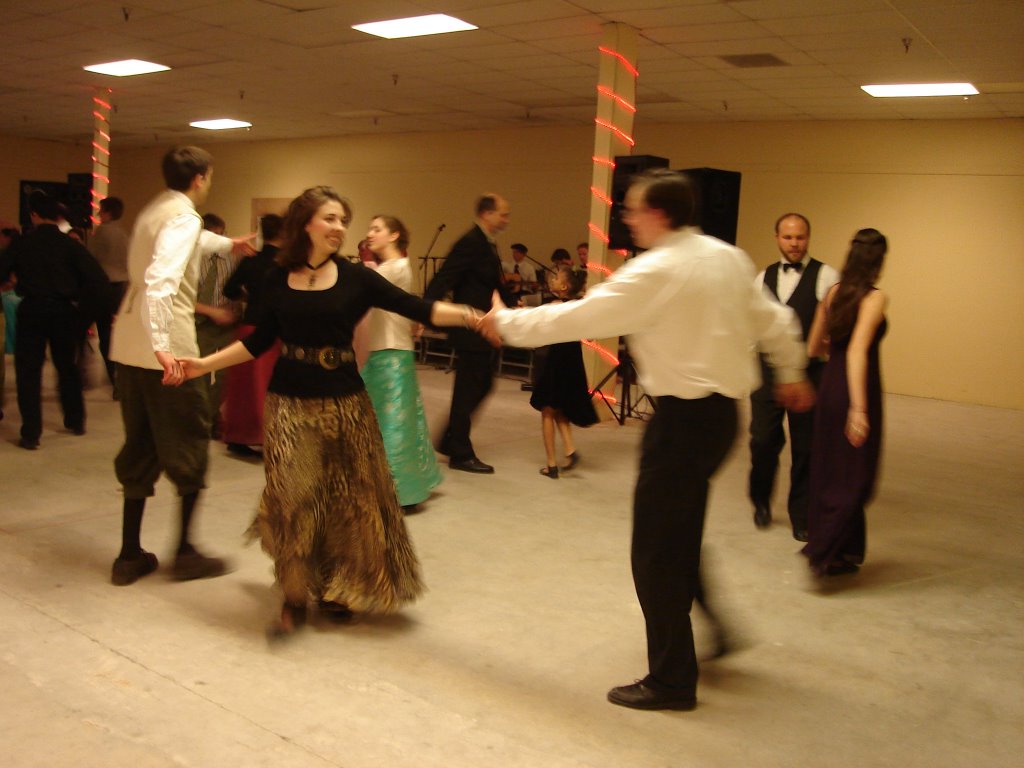
The families and churches that orbit the College remember that building community takes time. Time to work together. Time to dance together. Time to dine together and to linger over the jokes and coffee afterwards. They remember that community can't be built solely between the pew and the door at a once-a-week worship service.

They sing together at the merest excuse - at least as much as Pentecostalists. But this isn't your typical radio-dial praise chorus fest. They sing fugues, chorales in four-part harmony, Geneva jigs, jazz riffs and Psalms in Gregorian chant. This, too, takes time. Often Sunday evening ends with a Psalm-sing including two congregations, in which folks practice singing the challenging music in their psalter hymnals.

Academics were interesting at New St. Andrews, but the most distinctive study offered there is the opportunity to see an old-fashioned community creatively gathered and maintained. Students don't just see it. They are folded into it. About time, too.

A Hungry Worshipper Q & A 2


Pastor Smith sent this lovely excerpt from "Worship: A Royal Waste of Time" by . I thought you'd all enjoy it.

Also check out From Silence to Song, by Peter Liethart. This is an exegesis of 1 & 2 Samuel detailing how worship changed in Israel under David's leadership, and suggesting a framework for planning and evaluating our own changes in worship.

So, A Royal Waste of Time:

What is contemporary music? Do we mean choruses from Taize, pop songs, or
the esoteric music of Krzysztof Penderecki?

The value of their
metaphor of conducting a symphony is that it emphasizes the following aspects.

Unity. Even though a symphonic piece often has three or four
differing movements (usually one or two relatively faster segments and one or
two slower ones), these parts relate to each other. The same is true of any kind
of art; the elements of painting, similarly, must work together – with enough
variety for interest but not enough to make the piece incoherent. Even so the
components of worship must be congruent with each other.
Movements. A
symphonic piece varies widely in mood or tone or tempo between the individual
segments or portions of the piece. Similarly, the timbre of confession and
absolution is vastly different from the spirit in the hymns of praise.
Progression. There is a flow as the symphony progresses to its climax and
ending. So worship finds its high points in the Gospel reading and the Lord’s
Supper, but the liturgy that surrounds them makes a progression from the
entrance into worship to the dismissal into ministry.
The musical score.
There are specific notes to be played. So worship has a theme, usually generated
by the texts assigned for the day or chosen by the pastor. There are numerous
possibilities for the score – thousands of symphonies to choose from, a wide
range of texts. However, the performers must be faithful to the musical score,
even as pastors must be true to the text. (Obviously the analogy can’t be
stretched too far here because a musical score demands note accuracy far beyond
the requirements of worship. Perhaps we can avoid this problem by seeing the
composer of the score as the Church, with its arranger being a particular
congregation’s worship committee)
Diversity. Different symphonies require
vastly different instrumentation. Even so, worship calls for a variety of
musical sounds to display the rich splendor of God.
Numerous styles.
Symphonic music encompasses a wide diversity of sounds and flavors from al eras
and areas – from spare to lush harmonies, from romantic poignancy to marching
brassiness, from jazz to Latin or African rhythms, from European to Asian
melodies. Even so the music of the Church entails gifts from all people of God
throughout time and space.
Relationships. The conductor’s highest loyalty is
to the spirit of the music (for wich the written score and the composer are
valuable guides) – just as the worship leader’s superior authority is God (to
whom the community and the Scriptures are reliable escorts). Other relationships
are also essential in order for the symphony to be played well. A conductor
works together closely with the instrumentalists, just as the pastor and
musician in worship work with each other as team mates, and both work with the
worship committee to plan and carry out the best worship they can craft for the
sake of the particular congregation they serve.
Authority. The conductor
exercises the authority that is necessary for the performance – otherwise each
musician could go his or her own way – and the conductor is chosen for that
position because of his or her understanding of the composers, their music, and
how that music should be interpreted. Similarly, the pastor and musician are
mentors to the rest of the congregation in the art of worship, and out of their
expertise they exercise the authority of choosing and leading the elements of
worship.

Thursday, February 16, 2006

Back Soon


I will be away from my computer for nearly a week. I am checking out a college with my eldest daughter. No doubt there will be stories....

Wednesday, February 15, 2006

Share the Love Awards


Need some reading recommendations? One Woman's World is hosting the Share the Love Blog Awards. Mother-Lode has been nominated in the "Most Thought-Provoking" category. Check out the competition and cast your vote by Feb 20!

I wonder if reading blog award nominees counts as an Olympic sport?

Monday, February 13, 2006

A Hungry Worshipper Q & A


I've received some interesting email on the worship music series. It has led to some good discussion.

Pastor Greg Smith writes:

Given that the Bible does not proscribe any particular
musical style (content yes, instrumentation no); how does contemporary style
music fit into the task of worship; if at all in what you've said. Knowing, as
well, that artists will always use contemporary forms to communicate timeless
messages… and in that experimentation some will be retained and other parts
lost. (I'm not sure there is a right answer… just some guiding thoughts…)


My response:

I agree that the Bible doesn't proscribe any particular musical style. However, different musical styles produce different effects in their hearers. I think that we Christians get into a lot of unneccesary disputes because we ask the wrong questions. The question isn't so much, "What musical styles are acceptable in worship?" but "What do we need to be doing in this part of the service, and what musical form/style will assist us to do it?"

If we think about it, just one musical style can't carry a worship service. What is it we need to do through the service?

Prepare a reverent, awe-filled heart (something contemplative, full of
longing & aspiriation)
Approach the Throne of Grace (something joyful, triumphant, full of anticipation)
Confess sin (something sorrowful)
Give thanks for forgiveness (again, something joyful)
Consider God's Word to us (something meaty that can carry a thoughtful, profound, simple or complex compliment to the message of the day)
Feast at the Lord's Table (something that turns our hearts & minds to grateful contemplation, morphing to rejoicing)

Go back into the world equipped and commissioned (purposeful, joyful triumph,
maybe martial even)


I would like to see believers laying off the musical mud-slinging and banding together, bringing our various skills and preferences under the guidance of the needs of worship. A lot of the ill-will I've seen has come from believers allowing either personal preferences or a desire to please a crowd outweigh the consideration of serving God in worship and assisting fallen men (including ourselves) to draw near to Him.

As a matter of practical consideration, perhaps a discipline of reflection as we prepare for worship would settle a lot of things. We could ask ourselves:
What attitude needs to be supported in this part of the service?
Is this piece the best support for this attitude that we have at our disposal?
Am I just satisfying my own preferences or playing to the crowd for approval?


One last thought. Musical tastes are acquired. Musical tastes can be trained. Worship is largely about changing & maturing those who participate in it. We should be looking for our music to assist this over time as well. We should begin to be able to enter fully into the delights of all kinds of music as we learn its truest use in worship.

Well, I'll get off my soapbox now. Anyone want to heave a squashy tomato in my direction?

Sunday, February 12, 2006

Dustbowl Comfort


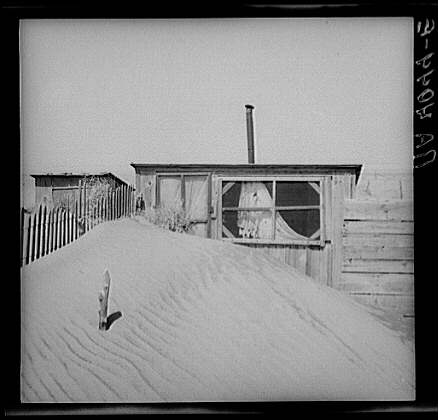
Desperately, Maude watched the rare clouds, ripening with their dark heads of rain. Standing at the fence line of her Nebraska farm, she pleaded with God. The wraithlike sheets of moisture folded across her neighbor’s field. A few drops spattered her thirsty boots. And that was all.

It was a death sentence. They had scooped that death from their door with brooms and shovels through all the booming, strangling dust storms of the previous years. They had drowned it with sweat and tears. But now that rain had returned to Nebraska, there still was no relief for their place.

Today was the last hope. Tomorrow, Maude and Everett would leave behind her family’s legacy; the house where her children had been born; the farm Everett’s father had carved out of the wilderness of his exile from the Old Country and of the Great Plains; the community where Maude’s father had been the original pastor. The car was already crowded with its pitiful load. The furniture would have to be left behind. Everything that wasn’t essential to starting over was too much. Maude was nearly fifty, her youngest child of high school age.

The Claudsons removed to Wyoming’s Powell Valley, where a newly-built irrigation system would make a wasteland arable. They and their grown children had taken the government’s ridiculous offer of a Dustbowl homestead in a valley where the virgin sagebrush stood higher than a man’s head.

But the Claudsons became the heart of that community cobbled together from the dry bones of Dustbowl failures. They helped to establish one of the first churches in Powell. Their little tar-paper cottage was the site of sing-alongs, hunting parties, family reunions and Bible studies. And it boasted the luxury of one of the most beautiful flower gardens in the county.

They dammed up the creek that flowed through their Wyoming place and made a pond. Every winter in the dreariest stretches, they invited the whole church – and everyone else who cared to come – to skate on the frozen pond. Everett would make up a fire on its shore, and Maude would simmer over it an enormous kettle of her homely chili and apple cider to warm their guests inside and out.

Through the generations, our family has enjoyed Great Grandmother Maude’s chili. Even in the leanest times, we can find the ingredients for this simple dish. And in the darkest days, I make her Dustbowl Chili and remind myself that death is not the end. That my forbearers learned to laugh in the face of destruction. And so will I.

Comfort food indeed!

Dustbowl Chili

4 c. dried pinto beans
Sort & rinse the beans. Cover with water. Boil for 10 minutes. Turn off the heat and let the beans soak for 1 hr. Drain.


6 - 12 oz. tomato paste
1 lg. onion, chopped
2 cloves garlic, crushed
3 Tbsp. chili powder
1 - 1 1/2 lbs. ground beef, browned
Add these ingredients to the beans. Cover the ingredients with water. Simmer until beans are tender (at least 3 hours). Add

1Tbsp. salt (if you add it earlier, it will prevent the beans from becoming tender)

If you are in a hurry, skip the soaking step. Put everything in a pressure pan and cook at 12 - 15 lbs pressure for about 15 minutes.

Thursday, February 09, 2006

Defending Home


So Betty Friedan is dead. But her feminist legacy as set forth in her seminal work, the Feminine Mystique, lives on.

Betty Friedan encouraged women to realize that there is more to life than a spotless floor, but she did so by denigrating the institution that could really liberate women: the home. Friedan's view of home as the place where women are trapped into a vicious "passive dependency" (The Feminine Mystique, Chapter 12) inhabited by:


"American housewives – their emptiness, idleness, boredom, alcoholism, drug
addiction, disintegration to fat, disease, and despair after forty, when their
sexual function has been filled"
leaves women with the notion that no intelligent, interested or even sane woman could hope to find useful employment, let alone fulfillment as a wife or mother.

Christians have rightly resisted the masculinization of women, but oddly, many have done so by characterizing the home in many of the same terms as Friedan did. Consider Friedan's description of a woman's life at home:
"Housewives are mindless ... ; They are trapped in trivial domestic routine
and meaningless busywork within a community that does not challenge their
intelligence. Housework is peculiarly suited to the capabilities of
feeble-minded girls; it can hardly use the abilities of a woman of average or
normal human intelligence."


And consider this Christian description urging women to stay at home in order to avoid sin:
"We need to be aware that we may be in danger of becoming a busybody. Is our
house clean? Are our children properly cared for? Is the laundry done? Is our
husband happy? Is that dinner carefully prepared or is it thrown together in a
mad dash to get something on the table at the last minute? Maybe we can get our
most honest answer from our husbands or our children. Will they say, "Actually,
Mom, it seems like you're on the phone all the time." Or "Honey, I asked you to
make sure my laundry was finished. But it seems you were on the computer too
long today because I have no clean underwear....A busybody goes from house to
house "tattling." We can go from "house to house" in many ways these days! We
have the telephone, fax machine, grocery store, homeschooling groups,
playgroups, church, and the most dangerous - email!!!! "

The difference is that Friedan thought it was a bad thing, and these Christians think it is wonderful.

While we can respect the patriarchal-Christians for their desire to obey Scripture, we must not simply take their interpretations uncritically. We will hardly entice women back home if they think the most challenging thing there is making sure her husband has clean underwear. Or if they fear that the normal commerce of life is the siren-call of sin, and that learning will make them proud, lazy busy-bodies.

Women today need a new liberation - a liberation from the idea of home put forward both by the feminist movement and by uber-patriarchal Christians. Defending Home will become a new series here, exploring the flawed pre-suppositions of feminism and scouting out the real scope of home. Along the way, we'll meet some more Professional Mothers, women who understand that in fundamental ways, home is the truest hall of power, the sweetest call to service and the loveliest work of art.


What are you doing from home?

Monday, February 06, 2006

There is more


In the intellectual mileu of contemporary culture, there's a lot of homage paid to the eastern idea of contentment. Indifference as contentment. Numbness as serenity. Death in life.

Some days this idea looks like a good alternative to feeling the longing and disappointment that are part of living in a fallen world. You know the days I mean. The days of caring for a demented aging parent while the relatives, who should be helping, criticize. The days of training a child who refuses to seize on anything or who rejects God's ways. The days of loving someone God has irrevocably placed in your life whose needs and demands are never satisfied. The days of praying without seeing an answer.

Eastern deadness provides a way to endure with patience trials of this sort. "I can stand it because nothing matters." "I can stand it because everything is illusion." But it is just that - death. Escape from reality.

Christ on the cross refused the draft that would have numbed His sensibilities and lessened His pain. He refused to escape from reality. He endured because He had a larger sense of reality. This present suffering is not the last word. It's not the whole picture.

Christian contentment does not consist of going numb (we miss the joy as well as the sorrow). It does not consist of minimizing reality. It consists of affirming that there is more. There is a heaven and an eternity in which longings will be fulfilled and sufferings will not only make sense, but will bear fruit that could not be seen from here.

Christian contentment is a journey to a larger world. There is more....

LinkWithin

Related Posts with Thumbnails